

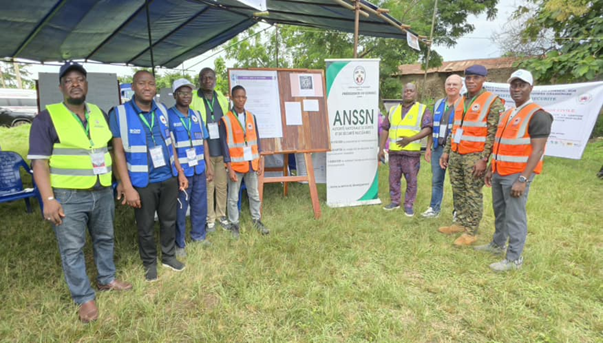
Lomé, June 2026: The National Nuclear Safety and Security Authority (ANSSN) participated in the "MIA DZRADO 2026" full-scale, multi-hazard simulation exercise, held from June 8 to 18, 2026, in the Bas-Mono Prefecture. For the first time in Togo, an exercise of this magnitude incorporated nuclear, radiological, biological, chemical, and explosive (NRBCe) risks.
A national exercise to test emergency response
Initiated by the Ministry of Security through the National Civil Protection Agency (ANPC), with the support of technical and financial partners, the exercise took place in the localities of Agomé-Glozou, Afomonou, and Togbodji. It aimed to strengthen the capacity of stakeholders to respond effectively to emergency situations, including floods, epidemics, population displacements, canoe capsizings, fires, and CBRN-E incidents.
The exercise mobilized stakeholders from national and local disaster risk reduction platforms—organized into ten clusters—as well as around twenty partners, including the North Dakota National Guard (USA). The scenarios were based on hazards identified in the national multi-hazard contingency and disaster response plan.
Officially launched on June 15, 2026, in Afagnan by the Prefect of Bas-Mono, the exercise was accompanied by initiatives benefiting local communities, such as free medical consultations and surgeries, the issuance of national identity cards, the grading of rural roads, and reforestation efforts.
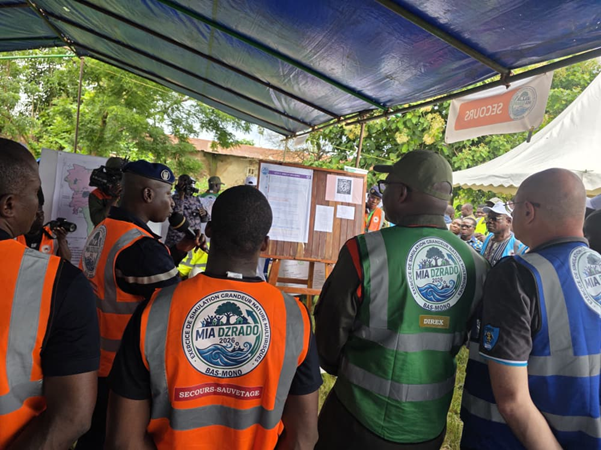
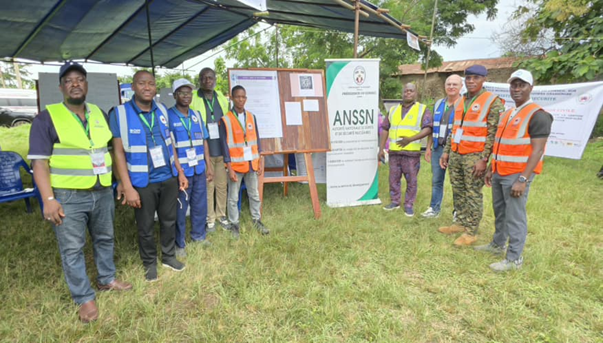
The ANSSN at the heart of the Operations cluster
The ANSSN sat in the Operations cluster, the real linchpin of the exercise. It worked alongside the ANPC, the Togolese Armed Forces (FAT), the National Authority for the Prohibition of Chemical Weapons in Togo (ANIAC-Togo), the National Unified Command Centre, the ministries in charge of territorial administration and the focal points of the other clusters.
This cluster has ensured:
- the organisation of clusters on the exercise site;
- the animation of the Operations Centre: liaison with the clusters, conduct of operations and situation points, dissemination of scenarios and injects, supervision and coordination of manoeuvres;
- liaison with the Fixed Command Post / National Emergency Operations Centre (PCF/CNOU).
Through its presence, the ANSSN provided its expertise on the nuclear and radiological dimension of the CBRN component. The scenarios played included a traffic accident followed by a chemical spill (cyanide) and the theft of a radioactive source. This participation made it possible to test the articulation between the regulatory authority and the other emergency response stakeholders, in line with the International Atomic Energy Agency's (IAEA) safety standards for emergency preparedness and response.
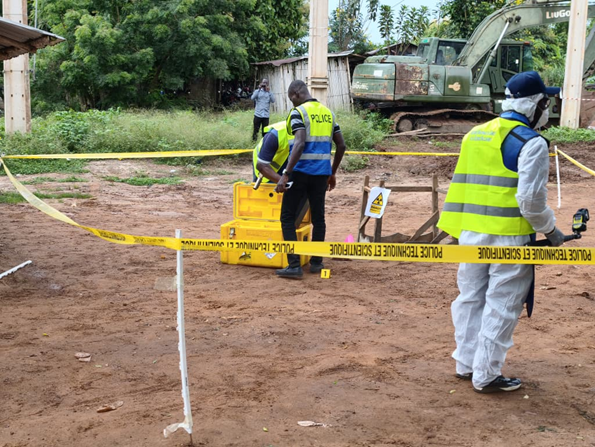
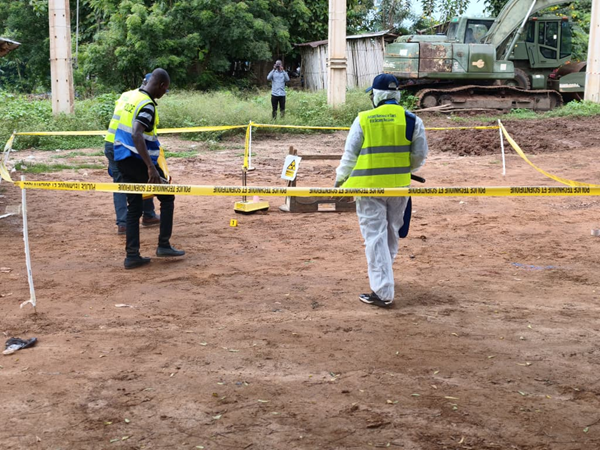
A national first and concrete achievements
The general report of the exercise underlines its innovative nature: it is the first national experiment integrating CBRN risks, which confirms the ability of the country and its actors to manage several contingencies at the same time. Among the achievements are the strengthening of the managerial capacities of actors, including local authorities, in the face of CBRN risks, the testing of operational procedures and good inter-service coordination.
Towards enhanced preparedness for nuclear and radiological emergencies
In his closing speech, the Minister of Security, President of the National Platform for Disaster Risk Reduction, recalled that this exercise "must be a continuous process and not an end in itself to better protect the population". He reaffirmed the central role of the National Emergency Operations Centre (NEOC) in the coordination of operations.
For ANSSN, MIA DZRADO 2026 is an important step in strengthening the national system for preparing for and responding to nuclear or radiological emergencies. The Authority intends to capitalise on the lessons learned, contribute to the development of CBRN standard operating procedures and continue its collaboration with ANPC, ANIAC-Togo and partners, including the IAEA, to protect populations and the environment against the harmful effects of ionising radiation.